



Strategic Partners

Green and Growing
When it comes to building a strategic, collaborative sourcing, and procurement organization, nobody is doing it like Green Infrastructure Partners (GIP) – but they will be.
By giving procurement a seat at the leadership table, Green Infrastructure Partners isn’t just unleashing the function’s potential to create value – it’s creating new opportunities for scalability and success.

Lately we’ve been hearing a lot about moving fast and breaking things to meet the demands of growth. It seems like a contemporary concept, but its long-term success relies on a bedrock business basic: It’s all about the execution. And when it comes to building a strategic, collaborative sourcing, and procurement organization, nobody is doing it like Green Infrastructure Partners (GIP) – but they will be.
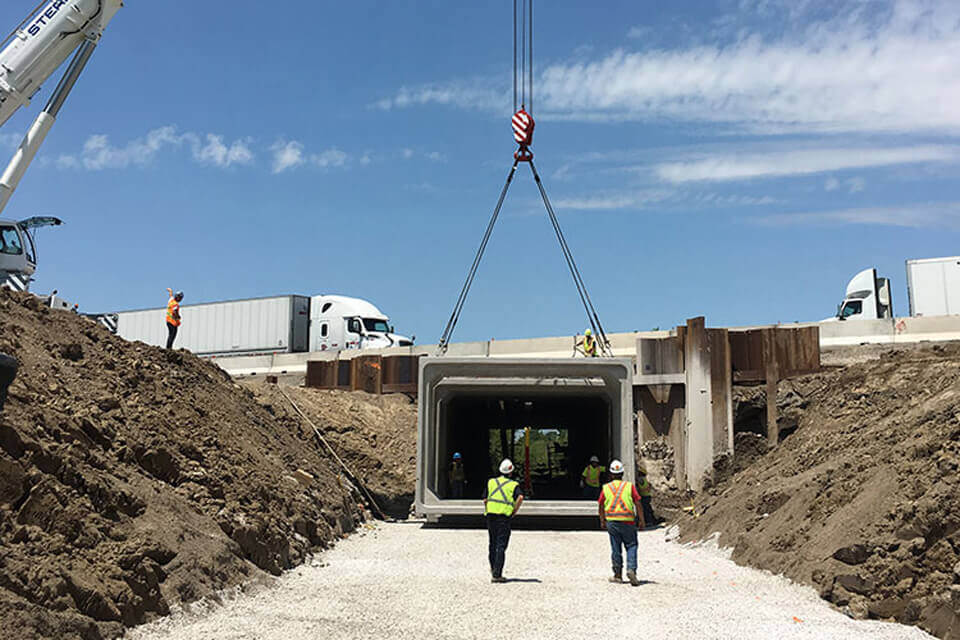
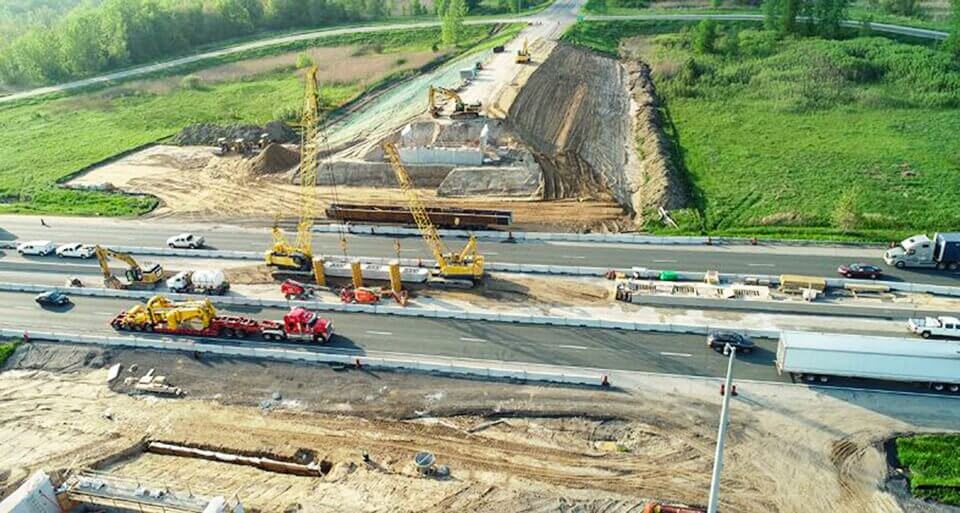
For over 50 years, Green Infrastructure Partners has designed, delivered, and maintained infrastructure for Canada’s growing cities. From demolition, shoring and foundations, excavation and remediation, structures, paving, and the production of materials, GIP self-performs all project scopes without reliance on subcontractors.
As Canada’s fastest growing and largest vertically integrated best-in-class infrastructure solutions provider, GIP specializes in complex end-to-end road-building and civil infrastructure for government, municipalities, and private clients.

“GIP is experiencing tremendous growth, both organic and accretive,” said Dipesh Pattni, the company’s SVP of Strategic Sourcing and Procurement. “A great place to start is deploying a procurement strategy to support this pace of growth.” As an expert in post-merger integrations and transformational leadership, Pattni has scaled up procurement organizations with a combined value over $1 billion.
Since 2023, Pattni has led the metamorphosis of GIP’s procurement organization, beginning with creating procurement value and delivering on the bottom-line improvement reflected in the P&L. This has given procurement a seat at the table – not to focus on procurement’s typical transactional set of functions, however – but to shape strategies for the success of the business.
“We are mapping the roadmap for source-to-pay technology adoption. The orchestration platform will prioritize user-experience, improve data quality and integrity in our business intelligence reporting. Until then, there are a half-dozen critical projects underway to make our golden data robust and reliable,” Pattni said.

The procurement team delivers speed through curating an ecosystem of high-quality partners with best-in-market value. “As a result, we do not entertain risky suppliers or one-size-fits-all mentality,” Pattni revealed. “My team’s most leveraged skill is collaboration and change management. GIP’s operations teams are delivering complex solutions for projects in the market and with my team’s support, overall lower supply chain risks and the best value in the local geography.”
With a total annual spend over $1 billion (CAD) across six categories and 30 sub-categories, Pattni’s team keeps an eye out for opportunities to optimize logistics and delivery, reducing total costs. The strategy strikes a balance between speed and expense by bringing the supply chain closer to the project execution.

“In construction, the larger players are so focused on growing the top line that procurement usually doesn’t have a seat at the table. They’re relegated to transactions and back-office priorities. What I’m trying to do is leapfrog and bring technology to the table that creates visibility, prioritization, and influence so we can grow the top line. We are prioritizing strategic supplier partnerships, while decisively moving away from transactional procurement practices.
“For example, in today’s highly competitive market, supplier partners are essential for business success. Suncor is one of our strategic partners. A recent example where Suncor stepped up and proposed fueling solutions which simplify and helps GIP execute projects quicker. Our partnership has grown to support GIP’s business through open communications, procurement gold-standards, consistency in service and alignment in goals. Their core value of ‘Safety above all else’ aligns well with GIP’s.”
GIP is exploring options such as AI and chatbots for routine purchases and leverage RPA to automate requisitions based on business rules that minimize transaction touches and integrate with the company’s financial systems. The next phase is to work with strategic suppliers to receive forecasts, place orders, and communicate order confirmation through EDI channels.
“I have developed a new operating model where GIP operates a best-in-industry sourcing and procurement organization and is viewed as a leader in the broader supplier community,” Pattni said. “The three pillars include assuring accountability in our suppliers by partnering with operations, managing supplier and supply risk to provide GIP a competitive advantage, and drive 1% to the top-line and 1% to the bottom-line in value through financial accountability.”
The team is organized to mirror the business needs with business enablement and operations for “fast-lane” requests during project execution, strategic sourcing to negotiate and secure favorable terms, and a center of excellence group that acts as the beacon for business intelligence, automation, AI, and governance.
The operating model relies on a collaboration council that leverages stakeholders in executive leadership, core operations, field project leaders, and the finance team. Collaboration councils set the pace of change and measure process and tech adoptions with a continuous feedback loop.
Acquisitions create what Pattni calls “chaos moments” as different cultures vie to become the organizational norm. Sorting out effective and ineffective processes can be a formidable challenge for procurement teams in a firm such as GIP.
“That’s the part that really gets me excited because it’s the phase of chaos that brings it to a scalable machine so that it can grow year-over-year and delivery more value to our infrastructure clients,” he said, noting that sourcing and procurement must scale with the company and provide the means and methods to make it efficient and profitable at the same time.
In 2024, our inaugural year for the procurement transformation, the team committed to accruing a couple of million in savings for the company. They delivered almost double that amount. “Less than 9% of spend under any sourcing or procurement influence when I started, and we are around 30% at the end of last year. Each of these milestones represents sheer forward leaning pressure to achieve something that’s incredible to deliver immediate value and transform procurement capabilities,” Pattni said.
Pattni and his team have already delivered significant value in five out of the 30 sub-categories they will eventually manage, including fuel rentals, large equipment rentals, tires and tire services, and shop supplies. By 2030, Pattni plans to multiply those savings by five, increasing spend under management by more than nine times, all while maintaining his current team size. (Thanks to digital solutions, labor concerns are not an issue, allowing him to keep his team efficiently scaled.)
“For organizations to scale quickly, as sourcing and procurement we have to create a paradigm shift. It requires you to rewire your DNA to scale this quickly,” he added. “For a multi-billion-dollar company to move as fast as we are you need to break some things to create new things. That’s the paradigm shift.”
That rewiring requires a bold, long-term vision, surgical precision, and the means and will to transform transactional functions to a nexus of true value creation. As a company committed to sustainable solutions – whether for the environment or the organization itself – GIP is setting the standard for procurement and sourcing in a growing and changing world.
—
Our work makes the world work.
The work we do touches lives, it impacts our schools and neighbourhoods, it helps improve the daily life and mobility for all. The projects we deliver for our customers grow economies, improve the resiliency of Canada’s infrastructure, connects our communities to resources and opportunities, and tackle critical environmental challenges. We are confident that the work we are doing today will carry us into a better, safer, greener tomorrow.
Building our Future
Green Infrastructure Partners (GIP) is one of Canada’s largest and most diversified infrastructure companies. We derisk the most challenging parts of construction by offering vertically integrated infrastructure solutions for public and private projects of every scale.
For over 40 years, our teams have been designing, delivering, and maintaining infrastructure for Canada’s growing cities. From excavating and demolition to foundations, paving, and the production of materials, we have the unique ability to complete an entire project without the need for subcontractors. Green is in our name because we believe in the necessity of sustainable solutions. We’re leaders in energy efficiency and we’re at the forefront of incorporating recycled and reused materials.
With our sights set on building a better tomorrow, we’re committed to long-term relationships and long-term thinking. We uphold the highest standards of safety and quality, ensuring every project provides the greatest benefits to our customers with the least disruption to our communities. The work we do shapes the future of our cities and will pave a new path for the future of our industry.
We are proud to be Canadian made.
—
Corporate Office
100 Commerce Valley Drive West
Markham, Ontario, L3T 0A1
Phone Number: 416 633 9670
Email: info@gipi.com
Homepage Link: www.gipi.com
Facebook: https://www.facebook.com/GreenInfrastructurePartners?mibextid=LQQJ4d
Twitter/X: https://x.com/i/flow/login?redirect_after_login=%2FGIP_social
LinkedIn: https://www.linkedin.com/company/green-infrastructure-partners/
YouTube: https://www.youtube.com/channel/UCc1jIpuSd7wcxS2SouMRxDg
Instagram: https://www.instagram.com/green_infrastructurepartners/
—


