


It Starts at Home
So far, the net-zero community contains 28 homes built between four and seven years ago using SmartGreen™ technologies GeoSolar pioneered.
Dr. Dar-Lon Chang’s decarbonization journey could change how we all live
Dr. Dar-Lon Chang and his neighbors usually pay $6 a month in utility bills. He’d like to help you do the same. Chang recently earned a promotion to president of GeoSolar Technologies, a startup focused on decarbonizing homes. Before he worked for the company, he was a resident of the Geos neighborhood in Arvada, Colo. So far, the net-zero community contains 28 homes built between four and seven years ago using SmartGreen™ technologies GeoSolar pioneered.
Disillusioned after 16 years at a large oil and gas firm, he decided to make the career change to work in clean energy, quitting his job before he had something permanent lined up.
“What allowed me to convince my wife to leave was the Geos neighborhood,” he told BOSS. “After living in the Geos neighborhood for two years, I heard about the startup company that was being based on our neighborhood.”
He took a job with that startup, which is now GeoSolar Technologies, and he’s helping lead the quest to decarbonize, one neighborhood at a time.
Net-Zero Neighborhoods

Residents of the neighborhood pay that $6 a month to be connected to the power grid. In summer, thanks to rooftop solar panels, they typically generate more energy than they use, so they bank credits with the utility company they can use in the winter. At the end of the year, the neighborhood is net zero.
“The homes are so efficient and they’re all electric, so all the electricity that’s needed for the home – heating and cooling, heating water, cooking, electronics – all of that is less than what the solar panels generate in a year.”
The next four homes going up in the neighborhood will be built with network geothermal systems, meaning that they will share two holes for about 300 feet deep for ground source heat pumps. This will save significantly on drilling costs, which can run about $25,000 in the Denver area. The systems will be configured so that each home can take the amount of heating or cooling it needs without interfering with the other homes’ usage.
“We want to expand this concept to entire communities, particularly new developments that are most amenable to doing a network geothermal system,” Chang said.
The system has been designed for Arvada, a northwest suburb of Denver that sits about 5,500 feet above sea level and receives 300-plus days of sunshine every year, so similar climates are currently the ones best suited for the technology. But GeoSolar is hard at work adapting the system for other climates and is looking at expansion of new builds to Arizona, which doesn’t have the same heating needs but has a lot of cooling needs and a lot of rooftop solar.
“We’ve had a lot of experience with the building of these homes, the issues of getting all the systems to work together. We’ve worked out all the kinks,” he said.
Retrofits
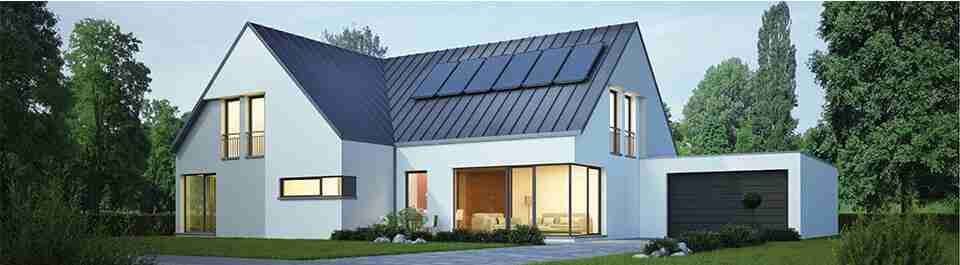
While it’s easier to build new homes equipped with SmartGreen™ technologies, GeoSolar specializes in retrofits using techniques perfected in the Geos neighborhood. You might not get the utility bills down to $6 in a house that’s several decades old, but even just putting the insulation in and sealing the roof could cut those bills in half. And that’s before you replace the gas furnace with a heat pump and replace other appliances with electric ones to decarbonize the entire house.
The Inflation Reduction Act provides federal tax credits of up to 30% for qualifying renewable energy projects, including such retrofits. The law also gives grants to low-income people and those most affected by pollution from oil and gas facilities to weatherize their homes and upgrade to heat pumps. It also funds programs in individual states to address the climate crisis.
“We feel this is the best time to use the experience we’ve had from building the Geos neighborhood and applying it to both existing and new developments,” Chang said.
Older homes are built like tents, he said, and they were built that way so they didn’t need much ventilation. The indoor air leaks out every hour or two, which keeps fresh air coming in but also requires a lot more energy to keep a steady temperature. In SmartGreen™ homes, it takes about 20 hours for all the indoor air to escape. Conditioning energy recovery ventilators make sure the incoming air captures 80-90% of the energy from the outgoing air before it leaves.
The ventilators also measure levels of CO2 and volatile organic compounds (typically from cooking and pets) and kick the system on to bring in fresh air as needed.
“Our overall vision is that a neighborhood has a mass retrofit that maybe a dozen neighbors agree to have their retrofits done at the same time so they can benefit from the contractors giving them a discount because they’ll have guaranteed work for months at a time.”
Since homes in the same neighborhood were often built around the same time and by the same builder, contractors would be able to quickly apply lessons learned from retrofitting the first home or two to the rest.
Going Commercial
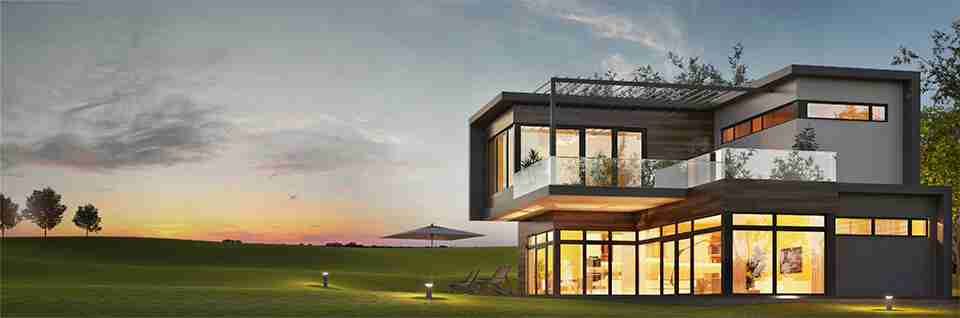
Peak oil and peak gas are not far off, Chang surmises. There’s a dearth of easy, abundant fields to tap, they’re costly to develop, and the climate crisis is too urgent. Prices will go up, production is going to decline, and decarbonized energy sources will be the norm. There will be a need to bring technologies like SmartGreen™ to commercial buildings and larger residential buildings like apartment complexes.
Retrofitting such buildings can be difficult without policies in place like the Energize Denver Ordinance that require net-zero targets for large buildings.
“But with these ordinances, there’s the flip side of the problem, which is you don’t have enough qualified contractors and companies that know how to do this, that know how to do the engineering work, that know how to scale up the kind of things that work for single-family residences to larger buildings,” Chang said.
GeoSolar Technologies is working on moving into that space, starting with apartment buildings, a bridge between the residences they’re familiar with and the commercial buildings they’re not familiar with.
Maybe one day we’ll all be living and working in decarbonized buildings powered 100% by renewable energy.


