Strategic Partners


Resetting the Cargo Compass
As part of their commitment to environmental stewardship, delivering value to their customers, and making supply chains greener, Fenix Marine Services expects to be a net zero company by 2035.
Fenix Marine Services intends to have net zero emissions by 2035, and they’re doing it in one of the nation’s biggest and most innovative ports
When Matt Dickinson was considering a career change from his job as a senior operations manager for Amazon, he suspected that a career shift to marine container shipping would be fairly simple in comparison. Now as the director of sustainability for one of the most innovative intermodal shipping organizations in the world, he’s got a very different perspective on simplicity.
“There is no larger intersection of uncontrolled variables in the logistics of the supply chain than a marine container terminal. Everything from geopolitics to weather to what the crane driver ate for breakfast are all things that can influence the outcomes that happen on a marine terminal.”
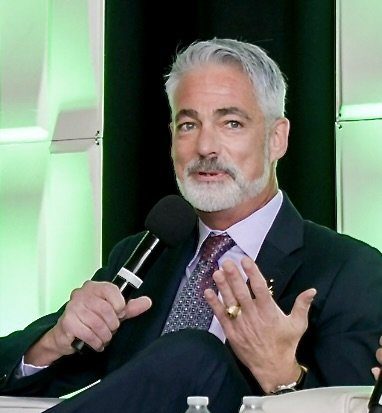
Matt Dickinson
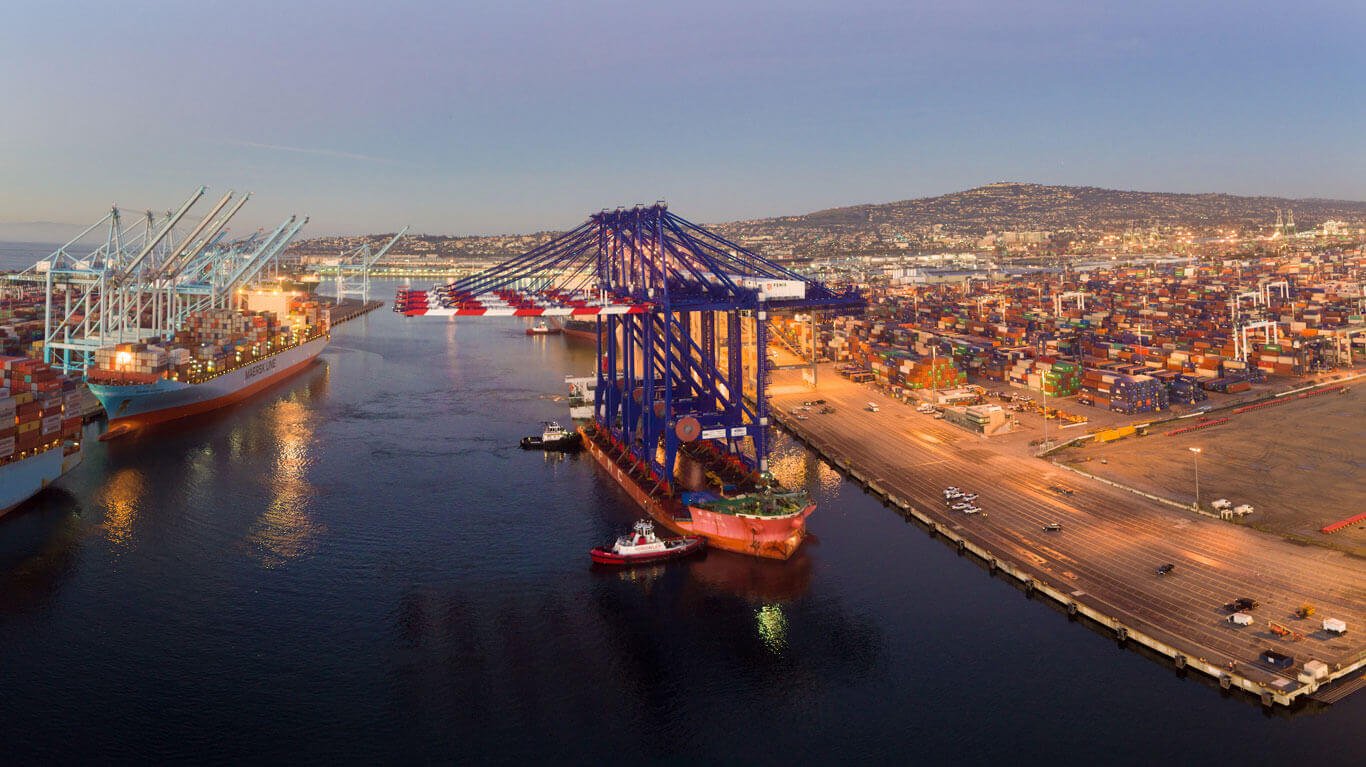
The outcome that Dickinson and his colleagues are working for is formidable. As part of their commitment to environmental stewardship, delivering value to their customers, and making supply chains greener, Fenix Marine Services expects to be a net zero company by 2035. A subsidiary of French shipping firm CMA CGM, Fenix operates one of the largest container terminals in the busiest container port in the Western Hemisphere, the Port of Los Angeles.
Fenix moves over 10% of the 8.6 million TEUs that pass through the gateway every year, and it’s Dickinson’s job ensure sure that they do so in the most efficient and sustainable way possible. In 2023, the Port generated $292 billion in trade while remaining focused on community investment, a commitment to sustainability and environmental leadership, workforce development, and infrastructure improvement.
Fenix operates four 1,000-foot-long berths that are at least 50 feet deep and 16 ship-to-shore container cranes. With ample rail and truck capacity, advanced information systems, a skilled workforce, and a philosophy of continuous innovation, Fenix is on the leading edge of terminal performance. It utilizes the most environmentally efficient technology commercially available for container handling equipment, including engine types and renewable fuels.
The Fenix mission is to “transcend conventional global port and logistics industry thinking to deliver best in market value to customers and investors while protecting our community environment and workers.” Digitization and new solutions promote sustainability and good service, and they help their customers and stakeholders deploy eco-friendly vessels. Their role in fostering sustainable industrialization and logistics in the nation’s No. 1 freight gateway is of critical importance to the industry.
“The question isn’t, ‘Do we have the technology to make this all a reality?’ We do. We absolutely do,” Dickinson asserted. “I think the real question is, ‘Does humanity have the wherewithal to get out of its own way to do this in time?’ And I’m hopeful. I believe it can be done, and that’s part of the reason that I find my role here so exciting.”
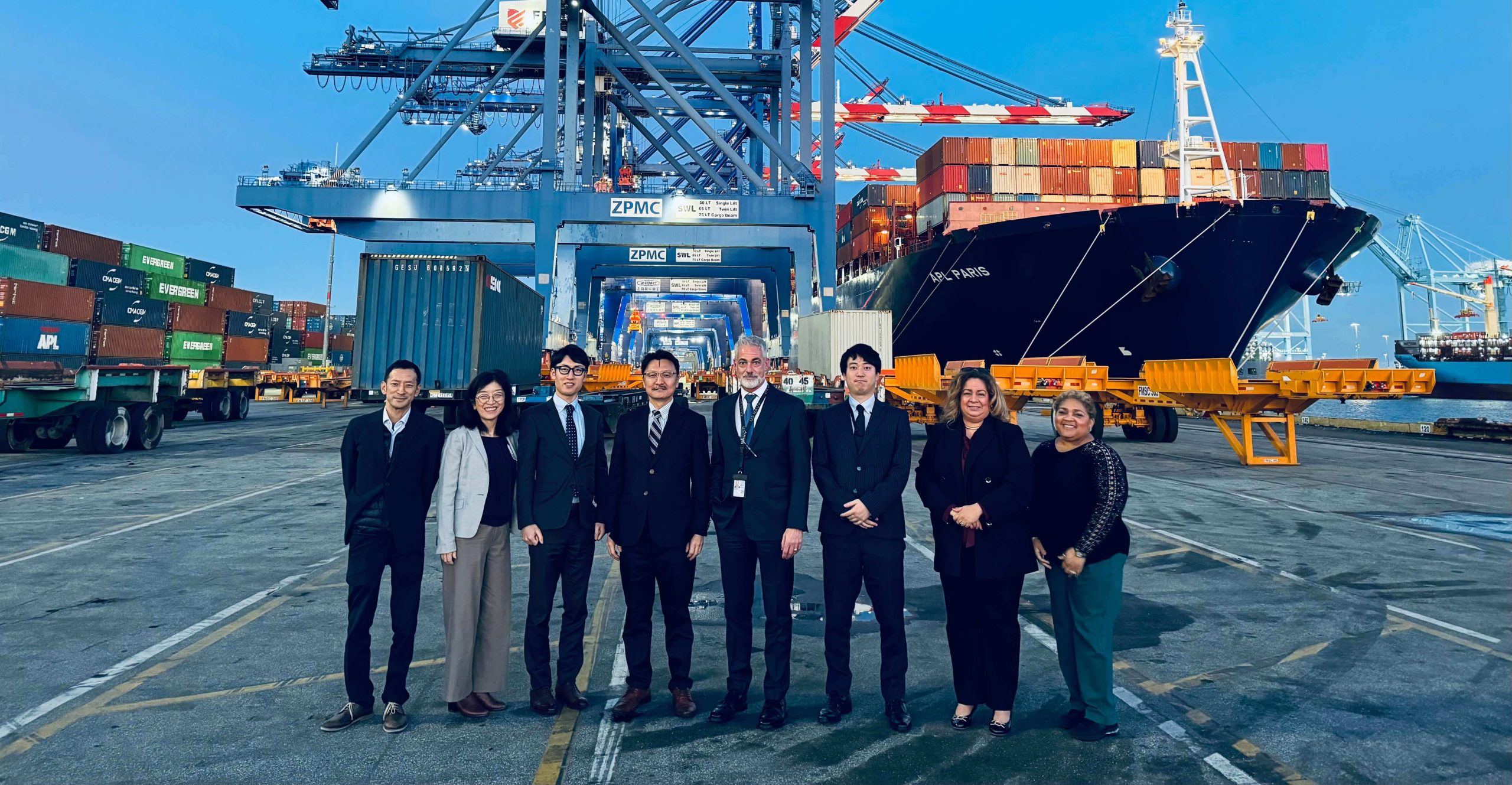
Fenix operates its equipment within its closed-loop ecosystem, refueling, repairing, and operating the equipment in a confined location, which can be easier to decarbonize. “That being said, we want to do it the best, we want to do it first, and we want to show the world what can be done when you establish strategic partnerships and you embrace change in a way that pragmatically sundowns a technology that is known to be bad for the environment,” he stressed.
Winged Victory
As part of their Path to Zero pledge to help save the planet, Nike was part of a pioneering alliance with Fenix and marine drayage specialists IMC to prove net zero can be achieved with public-private partnerships. Cargo coming off the ship was handled with zero-emissions, equipment was isolated in a net zero environment, and as a result, the project delivered the world’s first zero emission peel pile. A peel pile is a container stack that helps move containers more efficiently. IMC’s zero emissions truck fleet came in to help with intermodal shipping.
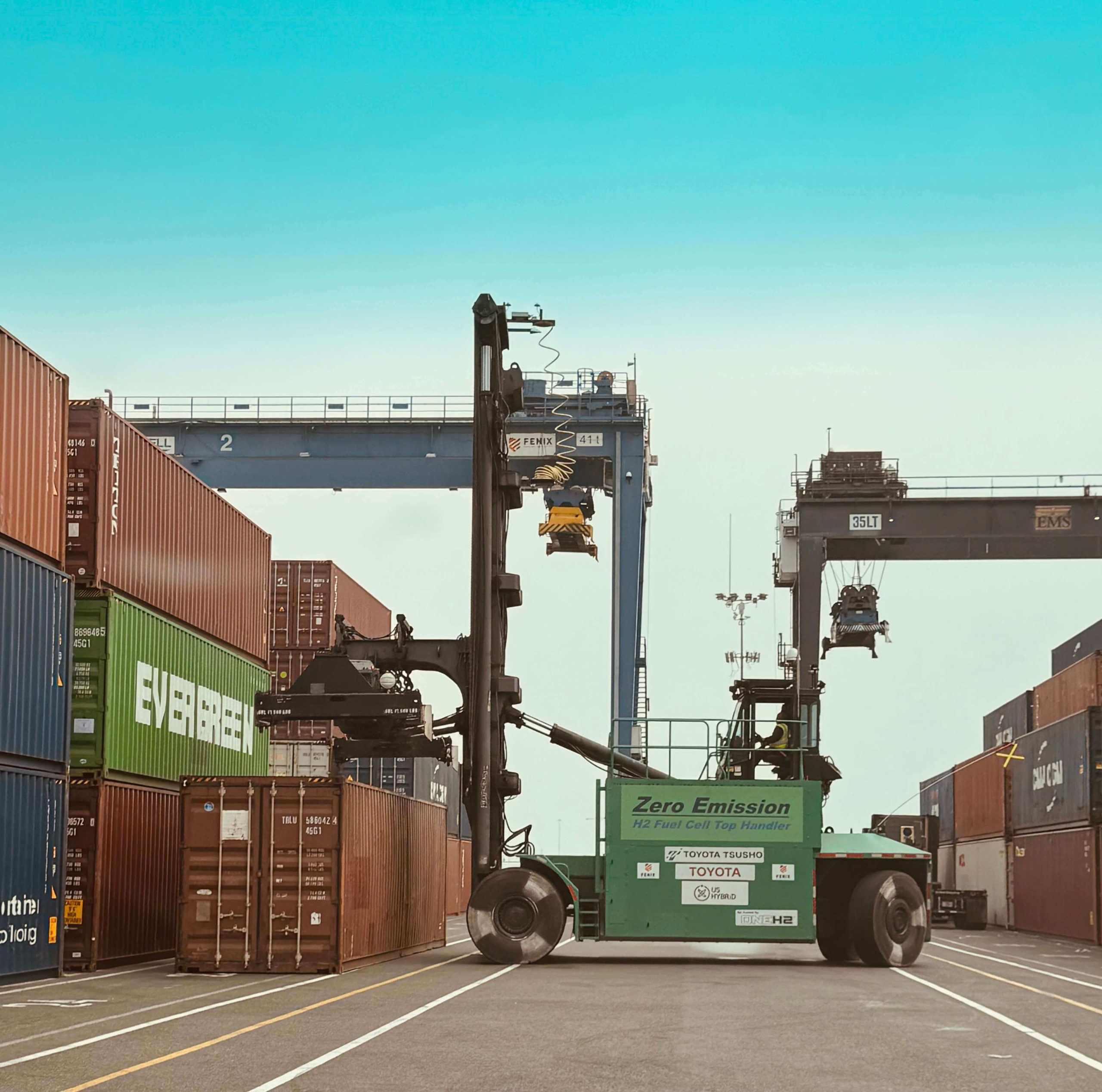
“We serviced all those trucks with the world’s only commercial hydrogen fuel cell Top Handler,” Dickinson said. The partnership proved – albeit on a small scale – that completely different unaffiliated agencies and entities can work together to create and implement zero emissions projects.
Additionally, from July 1, 2024, until May 31, 2025, Nike will integrate sustainable biofuel into 36% of its shipping volume handled by Fenix. Nike anticipates a drop in CO2 emissions of 25,000 tons, a dramatic advancement in its own commitment to environmental sustainability.
“We’re pretty aspirational,” he says of the passion for a healthier planet that he and his colleagues share. “It’s a fun experience because it’s never been done before and just when you think you have things figured out, you don’t. And it humbles you. It’s super interesting, super meaningful.”
Buy-in for sweeping ESG endeavors can be notoriously tough to get. Lately, Dickinson’s role has a significant educational purpose: to inculcate company leaders in the value proposition of sustainability. “Good behavior now isn’t added cost. It’s actually an investment. When you make these kinds of investments in an organization, in sustainability or the emissions reduction space there is going to be a quantifiable increase in market share as things develop and progress.”
Getting the workforce familiar with the why of environmental sustainability is his biggest internal project. From union workers that need to be comfortable with the technology to managers that need to know the capabilities and limitations of the equipment and any special characteristics that are going to impact their operation, Dickinson has lots of teaching to do.
He nodded to the length of time it takes to turn the container shipping industry on a dime. “Hopefully, I’m around long enough to help other terminals and other entities decarbonize in a meaningful way, holding on to their enterprise value. It’s one thing to do it, but it’s another thing to do it while you’re maintaining your operational level of throughput simultaneously. That’s where it goes from bush league to prime time in a quick second.
“Right now, we are in a vital time, and the next few months are probably going to chart the course for the next few years. If we can get a good push on multiple technologies to deliver emissions solutions to the port environment, that would be ideal. When all is said and done, Fenix will be a shining example of what’s possible,” he concluded.
—
Fenix operates one of the largest container terminals in the Port of Los Angeles, in a prime location adjacent to the deep-sea channel and the ship-turning basin. With four berths (1,000 feet each) a minimum of 50’ deep, 16 container cranes, ample rail and truck capacity, advanced information systems, a skilled workforce, and a commitment to continuous innovation, we’re on the leading edge of terminal performance today and tomorrow, at the heart of the busiest container port in the Western Hemisphere.
At Fenix Marine Services, we come to work every day ready to execute on our commitments to you, and to improve our services systematically. We believe that attitude determines altitude, and we bring a positive, results-oriented approach to every shipment. We know from experience that our skilled team, timely flow of information, and safe work environment are the foundations of delivering satisfaction. Count on it. Count on us.
Our Mission is to rapidly deploy value creation strategies that drive growth, while never compromising on safety. We will transcend conventional global port and logistics industry thinking to deliver best-in-market value to our customers and investors, while protecting our community, environment, and workers.
We favor positive, collaborative problem-solving: “Attitude determines altitude.”
We pursue and reward innovation; We think big, and ask “What if?”
We focus on operational performance by developing the best procedures, making best use of appropriate technology, retaining the most capable workforce, and making timely capital investments.
We plan strategically to create long-term growth by continuous innovation.
We maintain a constant focus on safety, because safety has purpose—it is critical to our success.
We fix problems as they arise. Evaluate, decide, act, move on, all with fairness and good communication.
—
Corporate Office
614 Terminal Way
San Pedro, CA 90731
Phone Number: 310.548.8700
Homepage Link: https://fenixmarineservices.com/
LinkedIn: https://www.linkedin.com/in/fms-fenixmarineservices/