


Strategic Partners

The Leadership Connection
“Being able to pick your head up and see how your 2 square inches fits in with the greater quilt of the organization is an invaluable lesson,” said Anindita Sinha, Vice President of Commercial Operations for Shionogi Inc.
Creating therapies for patients with tough to treat diseases is part of Shionogi Inc.’s mission to improve lives, particularly those in underserved populations. We go behind the scenes to get a glimpse of how commercial operations help to get it done.
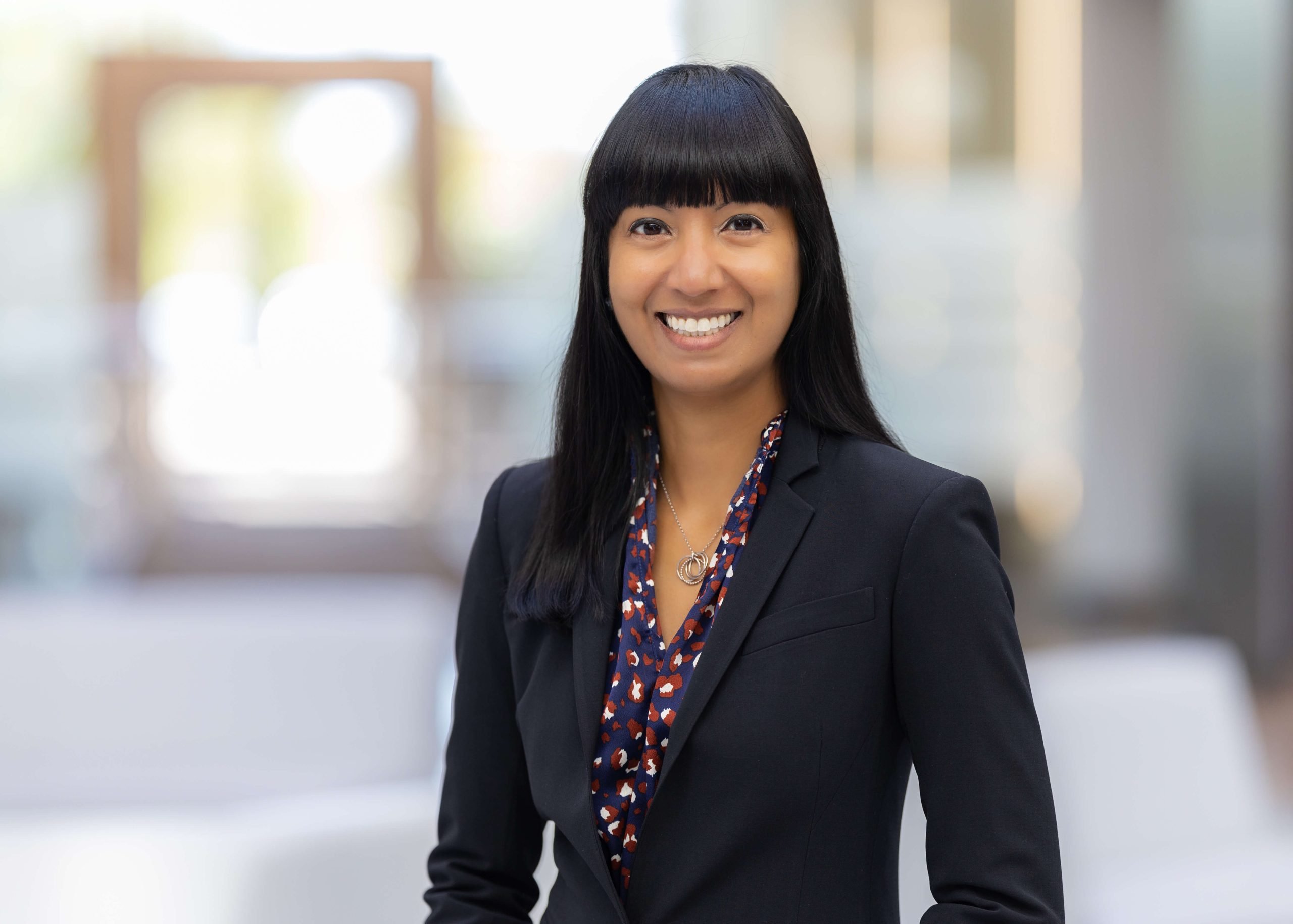
Anindita Sinha
Two square inches. By itself the measurement is pointless. But when that tiny territory is part of a multinational pharmaceutical company, it’s a metaphor for building small with mighty pockets of influence in it. For one of the industry’s most compelling young leaders, the scope of work that occurs in those inches is a pivotal aspect of drug commercialization.
“Being able to pick your head up and see how your 2 square inches fits in with the greater quilt of the organization is an invaluable lesson,” said Anindita Sinha, Vice President of Commercial Operations for Shionogi Inc. “I wouldn’t have been able to gain that if I didn’t have a chance to work with chief executives and understand their concerns. Their questions eventually get down to the 2 square inches where the connection between the two can be seen.”
With 15 years of experience in the pharmaceutical and biotech industries, the Columbia- and Yale-educated Sinha has leveraged leadership roles at Pfizer, Boehringer Ingelheim, Bayer, and other big-leaguers, as well as in smaller operations such as Optinose and Intercept Pharmaceuticals to establish her purview at Shionogi Inc., a U.S. subsidiary of the Osaka-based Shionogi & Co., Ltd.
Over the past several decades, Shionogi has discovered and introduced several novel antibiotics, as well as innovative medications for HIV and influenza. Today the company is focused on infectious disease, rare disease, and other areas with unmet medical needs.
In developing treatments for these disparate conditions, Shionogi demonstrates its clear commitment to spending its time and focus on areas with the highest unmet need. “Patients are defining the highest need, and they need these life-saving therapies and interventions,” she said. “My job is to make sure that my team and I are operationalizing anything that gets us there from a commercial standpoint as quickly and as efficiently as possible.”
Sinha leads the commercial operations team, overseeing commercial data management, training and development, meeting planning, and analytics and insights focused on two separate therapeutic pillars, as well as field and marketing operations and their subgroups.
The highly specialized and skilled team works as a truly unified, transparent unit. “One thing I absolutely love about them is they are incredibly dedicated and excited by what they do every day. This is where the difference between working with true professionals, true subject matter experts, and people who are truly industry leaders comes into play. They are the reason I am excited to get up every morning and head into work. It truly is a privilege to lead this team.”
She estimated that about 50-60% of her time is spent in meetings where participants are advancing the business priorities and strategic thinking.
“About 30% of my time is spent in doing project work,” she revealed. “Working at a relatively small company we need to be working managers. I love having some ownership of my little pieces of pie, while working with the rest of the organization to move other areas of the business forward.”
Looking to the future currently takes up the remaining 20% of her daily activities, ensuring alignment to future business scope and aspirations. Sinha and her team have two key priorities as commercial operations. The first is that they function as the engineers of the commercial team. “Our functional expertise, time and commitment is what keeps the engine of the commercial organization running smoothly.”
The second is bringing the outside in. Conceptualizing the future demands that the commercial operations team must be a few steps ahead of the rest of the organization. “A big part of my job is scouring the environment for the next best thing. How can we learn about it, and is it relevant to our business? If so, how can we operationalize it and make it something that gives us a competitive edge?” she noted. “I’m always thinking about our business five or six steps ahead, and what we need to learn today to be ready for that future innovation.”
When strategic partners present new solutions to the commercial team, Sinha actively compartmentalizes the excitement and “tech” talk to learn how the practical ways the solution aligns with the business. “A lot of my questioning with strategic partners is around, ‘Do you understand where we need to end up? Are we aligned on that question to begin with? Do we know what our goal is? If we do, tell me how you think you can help me get there faster and with a competitive edge.’”
Prior to entering the industry, Sinha planned to build her talents in academia. Studying for her doctoral degree in Microbiology, she was in a good spot to ascend there. After her time in New Haven, she decided to move into a completely different arena where she could leverage her critical thinking skills – consulting.
“I have always been a huge supporter of people going into consulting for a couple years simply because that’s the ultimate way to get a crash course in the industry and learn great discipline. You learn how to tell a story well, and you make connections there that are hard to make in different pharma silos if you start in pharma right away.”
Moving from a large pharma enterprise to a relatively small one taught Sinha what it truly means to roll up your sleeves and get things done without resources. “When you are strapped to the gills for everything, you have to learn to truly be innovative and creative and make the most of what you have. You also learn how to quickly leverage and empower the key strengths on your team, as you are literally all in the trenches together.
“That, to me, was absolutely one of the most pivotal moments for me in my career because I think it’s allowed me to be the leader that I am today,” she concluded. “That is one of my greatest achievements. I look back on it with a lot of pride, a lot of satisfaction, and a lot of personal happiness. I hope that I can do that again here and continue to exude that sense of pride and empowerment.”
—


