

Heated Rivalry:
Technology, human dynamics, and the drive to compete
Written By: BOSS Editorial
Reading Time: 6 minutes
By Damien Martin
“Our North Star is a homage to our co-founder, Bill Bowerman, and a challenge Kobe Bryant put to all of us: ‘Create epic s— and make athletes better.’ Everything begins and ends with the athlete’s voice — their goals, their struggles, their drive.”
That’s Phil McCartney announcing Nike’s explosive sprint towards yet another era of brilliant athletic leadership. The company’s chief innovation, design, and product officer added, “By uniting our creation organization across Nike, Jordan, and Converse, we’re accelerating progress and fully leveraging our strengths to deliver epic products that make athletes better. It’s a new day in Innovation, Design, and Product at Nike.”
The restructuring of their internal organization shifts their categories across the trio of brands instead of the traditional bracket of men’s, women’s, and kids’ lines to drive the development of cutting-edge products for athletes everywhere.
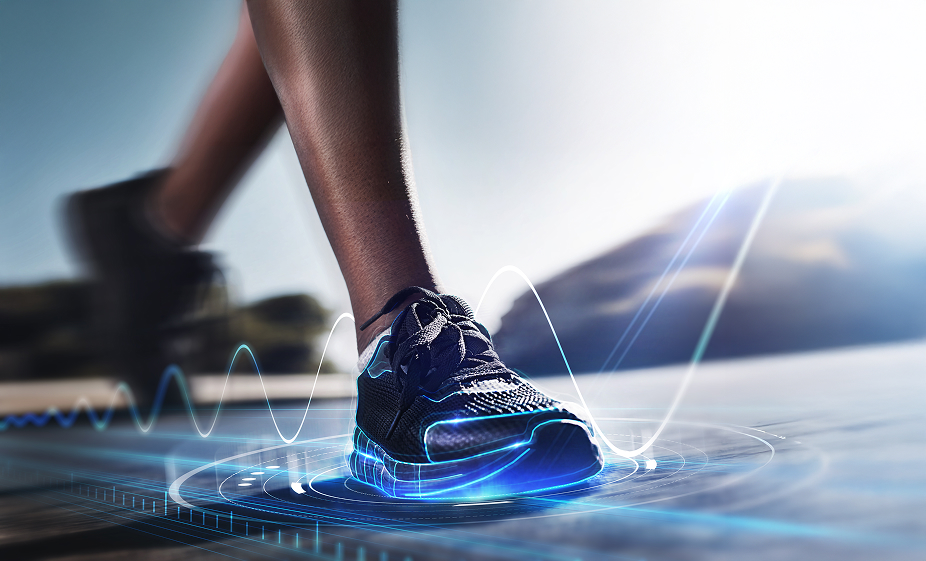
The company’s tradition of merging human dynamics with cutting edge technology is helping to power the evolution of sports performance, racing to solve problems that athletes may not even recognize on their own.
The move centers on four smart apparel and footwear innovations: Aero-FIT cooling technology, which increases the airflow of their legacy apparel; Nike Mind, their first neuroscience-based footwear designed to let “athletes lock in their mindset pre- and post-competition;” Project Amplify, a first-generation battery-powered footwear system designed to make ambulation easier for everyday athletes; and Therma-FIT Air Milano temperature-regulating performance outerwear that runs the gamut from puffers to hoodies.

“We focus on the athlete’s unique relationship with their sport, creating solutions they never knew they needed and can’t live without,” McCartney said. “We imagine and innovate — always starting with athletes, staying grounded in sport, and pushing what’s possible in innovation, design, and product.”
In addition to Nike, the market leader whose market cap in 2025 was a podium topping $107 billion, other leading technical athletic performance brands include ASICS, UnderArmour, New Balance, On Running, and Hoka.
Natural ability rises to new heights
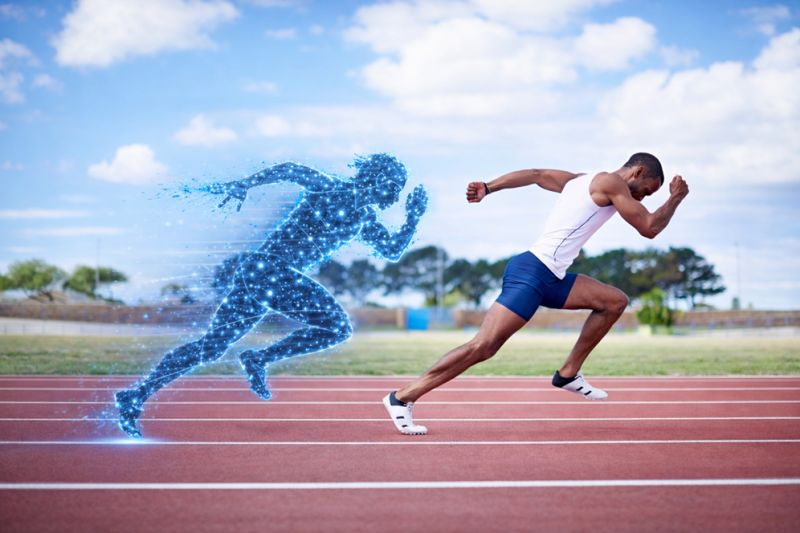
Performance enhancers, such as Nike’s latest innovations, are driven by the newest force multipliers in technology, including AI-powered real-time analytics, wearable biosensors, and immersive simulation tech. Radical shifts in the mechanics of performance now include AI movement tracking, predictive fatigue modeling, VR training, smart apparel, and automated performance scouting.
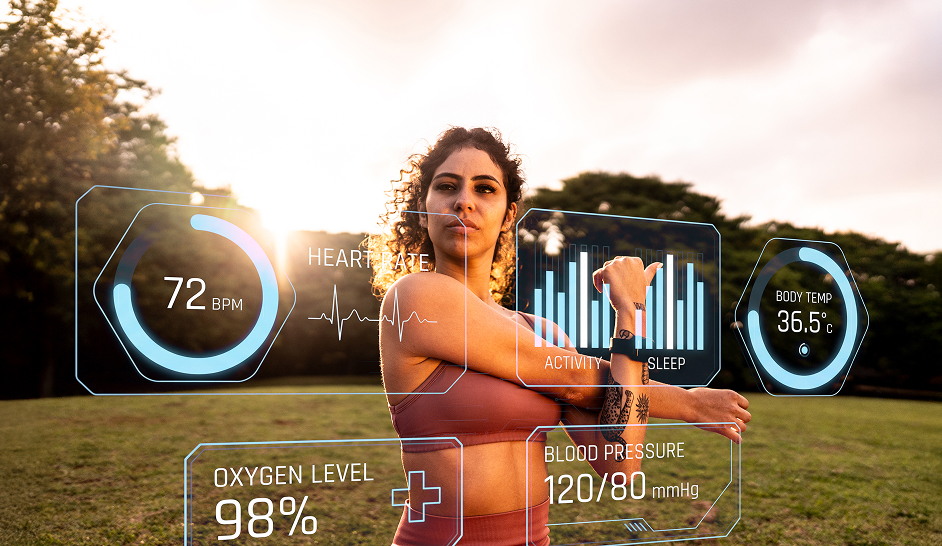
These data-driven approaches make it possible to create precisely targeted skill development strategies. AI motion recognition systems continually monitor movement patterns and deliver accurate feedback in real time; data analysis and AI provide quantifiable insights into biomechanics, performance trends, injury risk potential, and recovery patterns.
By feeding data from wearables into AI systems that go beyond collecting metrics into delivering actual interpretation, insights become actionable and provide real decision support. Predictive modeling and data-driven analytics performed by edge AI have revolutionized performance analysis. Edge AI blends edge computing and AI to perform machine learning tasks directly on interconnected edge devices with or without an internet connection.
“When relevant data is not only crunched but analyzed and interpreted using the power of ‘edge AI’ algorithms, sports analysts can take advantage of even more precise and personalized insights,” according to Nordic Semiconductor’s Thomas Soderholm “Adding AI and machine learning to the mix allows, for example, a sports wearable with the same sensors as before to now continuously monitor several performance parameters simultaneously, uncovering meaningful patterns that were previously hidden.”
Cognitive performance skills such as concentration, focus, emotional regulation, resilience, and confidence can be accurately measured, helping to train not just the body, but the mind. Emerging AI performance optimization models integrate stress response, reaction time, decision-making speed and accuracy, and track both physical and metal fatigue. Analysts expect that goalies, quarterbacks, and fighters will be among the early adopters.

Billy Beane was just the beginning
When the Oakland A’s found themselves with short arms and shallow pockets for talent development, GM Billy Beane found a way to compete with much richer teams by replacing the anecdotal evidence that scouts were using to find the next Jackie Robinson or Satchel Paige with data-driven analysis.
His “moneyball” approach replaced outdated performance analysis like RBIs, batting averages, and stolen bases with evidence-based analysis. In doing so, the team found undervalued players whose untapped potential had been masked by their low market prices. The rest – a 20-game winning streak and playoff spots in the 2000-03 seasons – is history.
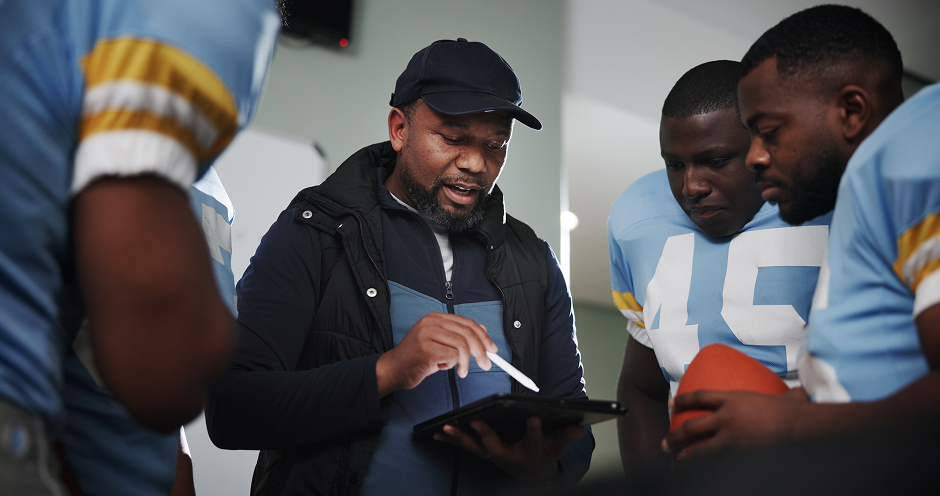
But finding that talent was just one step towards success for the A’s, just as it is today. No technology, no matter how sophisticated, can replace the human side of coaching. Players look for validation, inspiration, empathy, and trust, and the best coaches at any level use their expertise, intuition, and superior relational skills to do much more than rack up pennants and trophies. Coaches guide action on the field and in every aspect of life.
“Unlike technology, which focuses on quantifiable metrics, the human aspects of coaching address intrinsic motivation, emotional intelligence, and adaptive problem-solving,” Judge and Moore wrote in Sports Journal. “Coaches who master the art of blending traditional practices with support from innovative technology will not only thrive but also redefine the coaching profession by offering their athletes a multidimensional support system.”
Wearables deliver real-time data on physiological responses and recovery profiles to prevent injury prevention, and cloud-based platforms enable coaches to better communicate through real-time, seamless sharing of playbooks, video analyses, and tactical adjustments. The continued refinement of AR and VR technologies provide immersive simulations of realistic competitive conditions for both coaches and athletes.
When it comes to seeing and analyzing who’s doing what on the court, the diamond, the pitch, or the ice, AI-powered sports video and analytics developers such as PlaySight provide sport-specific feedback on mechanics and strategy. Their SmartCourt® technology delivers automated video, live streaming, analytics, and performance tools across multiple sports, including pickleball, tennis, basketball, and others. Emerging innovations, including Catapult’s Vector S7/T7 wearable GPS- and LPS-tracking systems, deliver detailed insights into athlete movement, speed, and workload.
Technology alone can’t deliver the heart-stopping thrill of professional or varsity sports, or the passion, blood, sweat, and tears of the triathlete, sprinter, or long-distance runner. It is neither a rival or a replacement for the uniquely human experience of play.
Nike’s McCartney sums up the real gifts of athletic performance optimization: “What comes out of our creation teams isn’t just innovative — it’s the kind of work that stops people in their tracks. It wows. It resonates. It makes people feel something. And that’s the magic.”
More Articles Like This


From fake to favorite: food’s big flex
Consumer demand for plant-based foods is intensifying, fed by an emerging class of enthusiasts – the flexitarians

Build Without the Bottlenecks: 4 Tools Helping Software Teams Move Faster
Explore four tools helping software teams move faster by improving testing, browser automation, app generation, and AI-ready data infrastructure.

How Steve Rozenberg Went From Airline Pilot to Business Solutions Expert for Contractors
Learn how Steve Rozenberg transitioned from airline pilot to business solutions expert, using systems and structure to help contractors build scalable...

