


Yehuda Gittelson Explains Community Solar Projects and Maine’s Changing Energy Access
Yehuda Gittelson fields questions about community solar three times weekly. A Portland renter wants to know if she qualifies despite not owning property.

Written By: BOSS Editorial
Reading Time: 10 minutes
Yehuda Gittelson fields questions about community solar three times weekly.
A Portland renter wants to know if she qualifies despite not owning property.
A small business owner in Biddeford asks whether he needs roof space.
A low-income homeowner from Lewiston wonders why the program sounds too good to be true.
The confusion makes sense. Community solar represents a departure from how Americans traditionally access renewable energy. The model eliminates two major barriers: property ownership and upfront capital.
How Shared Arrays Work Without Rooftop Installation
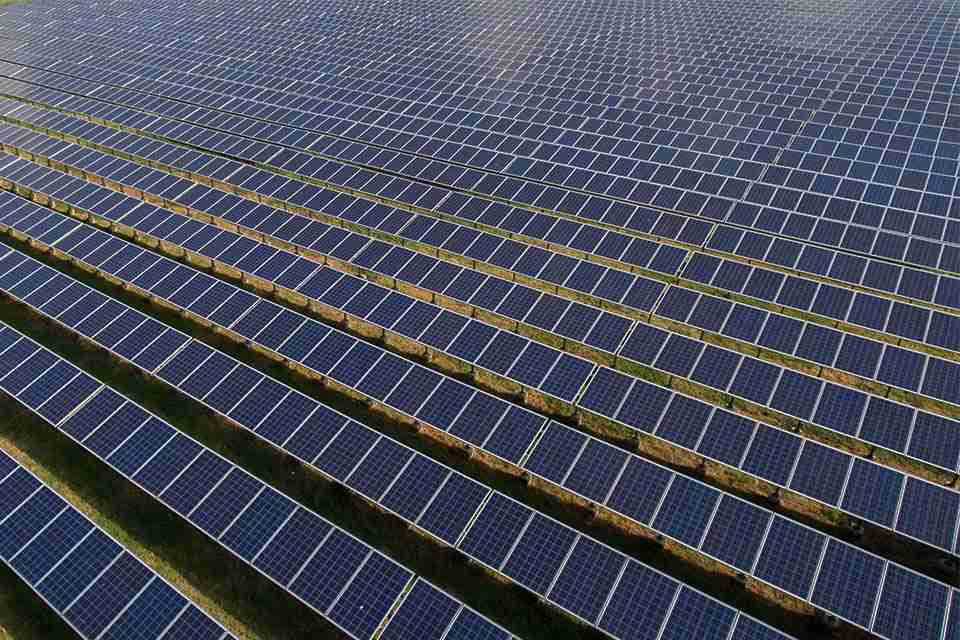
Community solar allows multiple customers to subscribe to shares of a large off-site solar array. The array feeds electricity into the grid. Subscribers receive credits on their utility bills proportional to their share of production. The credits reduce what subscribers owe their utility company. Then the solar developer bills subscribers for those credits at a discounted rate, typically 10 to 15 percent below standard electricity costs.
Subscribers pay nothing up front. They need no roof installation. They can cancel subscriptions if they move or their circumstances change. The arrangement extends solar access to renters, apartment dwellers, businesses leasing buildings, homeowners with shaded roofs, and anyone lacking capital for traditional rooftop systems costing 20,000 to 40,000 dollars.
Maine’s Decade-Long Stall Before the 2019 Breakthrough
Maine arrived late to community solar. The state initially passed enabling legislation in 2009. But restrictive net metering caps, a nine-customer limit on shared projects, and policy uncertainty stalled development for a decade. Maine ranked last in New England for solar deployment and solar jobs per capita through most of the 2010s.
The breakthrough came in 2019. Governor Janet Mills signed LD 1711, An Act to Promote Solar Energy Projects and Distributed Generation Resources. The legislation eliminated the customer cap on shared facilities. It raised project size limits from 660 kilowatts to 5 megawatts. It established Net Energy Billing programs with kWh credits at retail rates. It directed utilities to procure 375 megawatts of distributed generation capacity through competitive bidding.
The policy shift opened Maine’s community solar market. Dozens of developers submitted proposals for projects to the state. Within two years, over 1,000 megawatts of projects secured interconnection agreements, exceeding program targets. The rapid response demonstrated pent-up demand from both developers and customers.
But success created problems. The Maine Public Utilities Commission determined that early procurement rounds were noncompetitive. The legislature suspended those elements in 2021 and capped the Net Energy Billing program at 750 megawatts. That cap was reached quickly. Additional projects now wait for program expansion or successor policies.
Gittelson works with clients navigating this constrained environment. His solar installation company primarily handles rooftop residential and commercial systems. But community solar inquiries increased after LD 1711 passed. Customers who previously had no solar options suddenly saw advertisements promising bill savings without installation.
He explains the mechanics during consultations. A typical Central Maine Power customer uses about 550 kilowatt-hours per month. A community solar subscription sized to cover 85 to 90 percent of that usage might generate credits worth $ 100 per month. The utility applies those credits to the customer’s bill as a line item reduction. Then the solar company invoices the subscriber $ 85 for those credits, creating a $15 monthly savings.
The economics work because large ground-mounted arrays achieve better efficiency and lower costs per watt than small residential rooftop systems. Economies of scale reduce installation and maintenance expenses. Optimal site selection maximizes production. Professional operation and monitoring ensure performance.
Addressing Energy Burdens for Low-Income Households
Community solar also more equitably redistributes financial benefits. Traditional rooftop solar requires substantial upfront investment, even with financing and tax credits. That structure favors homeowners with good credit, stable income, and suitable properties. Low-income households, renters, and people with poor credit face systematic exclusion despite potentially benefiting most from reduced energy costs.
LD 1711 required that at least 10 percent of each community solar project serve low- and moderate-income households. That carve-out reserves 25 megawatts of the 250-megawatt community solar target for populations bearing the highest energy burdens. The requirement recognizes that low-income Maine households spend nearly 20 percent of their income on energy compared to single-digit percentages for average households.
Maine received federal support amplifying these efforts. In April 2024, the EPA awarded Maine a 62 million grant through the Solar for All program created under the Inflation Reduction Act. The funding targeted 20,000 low-income households for rooftop solar with storage, cooperative solar projects, and new community solar programs. It included workforce training for 700 Maine residents in the electrical trades, construction, and the building trades.
The Solar for All award never reached implementation. The EPA terminated the program in August 2025, following the passage of federal budget reconciliation legislation, eliminating the Greenhouse Gas Reduction Fund. Maine had spent approximately 200,000 dollars on planning before termination. The state’s implementation plan had just received EPA approval weeks before cancellation.
The reversal frustrated advocates and officials who had spent months developing programs to address energy access barriers. Low-income households that might have saved $ 380 to $ 1,400 annually lost access to planned subsidies. Workforce training programs never materialized. The gap between policy ambition and program delivery widened.
Gittelson sees similar gaps in the availability of existing community solar. The 750-megawatt cap effectively closed the program to new projects. Customers inquiring about subscriptions find waitlists or discover nearby projects reached capacity. Some turn to rooftop solar if circumstances allow. Others continue paying standard utility rates without renewable options.
Several community solar providers operate subscription programs for existing projects. Nexamp, Perch Energy, Solar Gardens, and others match customers to available arrays throughout CMP and Versant Power territories. Typical discounts range from 10 to 20 percent for low- to moderate-income subscribers and from 5 to 15 percent for standard customers. Subscribers can join at no upfront cost and with minimal paperwork, beyond providing utility account information.
ReVision Energy offers an ownership model distinct from subscription programs. Customers purchase shares of community solar arrays outright or through financing. Owners receive long-term locked-in energy costs, production credits on utility bills, and local maintenance support. The upfront investment resembles traditional rooftop solar economics but does not require suitable property.
Different models serve different populations. Subscription programs prioritize flexibility and accessibility with no capital requirement. Ownership models appeal to customers seeking long-term cost certainty and willing to invest up front. Both expand solar access beyond the constraints of traditional rooftop installations.
Interconnection Delays and Siting Conflicts Slow Growth
Barriers remain despite policy progress and diverse program offerings. Interconnection delays slow project development. Utilities managing connection queues are experiencing backlogs due to the surge in applications following LD 1711. Projects securing interconnection agreements sometimes wait years for grid connection approval and construction to begin.
Siting challenges complicate development. Community solar requires land, either ground-mounted installations on agricultural or unused property or rooftop arrays on commercial buildings. Maine’s conservation community advocates responsible siting, avoiding prime farmland, forestland, and wildlife habitat. Developers balance site economics against environmental considerations and local opposition.
Agricultural land presents particular tensions. Large flat fields offer ideal solar conditions. But converting productive farmland into solar arrays raises concerns about food production. Some projects incorporate dual-use approaches combining solar panels with sheep grazing or pollinator habitat. Others target previously disturbed sites, such as closed landfills, brownfields, or large commercial rooftops.
Financing adds complexity for project developers. Community solar projects require significant capital before generating revenue. Developers must secure land leases or purchases, navigate permitting, complete interconnection, construct arrays, recruit subscribers, and manage ongoing operations. The 20-year contract structures promised under LD 1711’s procurement process offered financing certainty. Without those guaranteed offtake agreements, developers assume greater market risk.
Gittelson explains these dynamics when customers ask why community solar isn’t more widely available. The policy framework exists. Customer demand exists. Developer interest exists. But interconnection capacity, land-use tensions, financing structures, and regulatory caps create bottlenecks that limit the deployment pace.
Maine’s experience reflects broader challenges in community solar adoption. Forty-three states, plus Washington, D.C., lack any community solar policy. Twenty-two states have enabling policies, but implementation success varies widely. Only a handful of states, like Minnesota, New York, and Illinois, developed robust markets with hundreds of megawatts of completed projects serving hundreds of thousands of subscribers.
Successful programs share common elements. Clear regulatory frameworks with stable long-term rules attract developer investment. Streamlined interconnection processes prevent project delays. Strong subscriber protections ensure customers receive promised benefits without predatory contracts. Low-income carve-outs address equity concerns. Siting guidelines balance land use trade-offs.
Maine made progress on several fronts through LD 1711 and subsequent policy refinements. The state removed arbitrary customer caps, increased project size limits, established credit mechanisms, and mandated participation by low-income individuals. But the program cap and interconnection bottlenecks pose challenges to rapidly scaling community solar.
Gittelson sees opportunity in Maine’s constrained market. The 750-megawatt cap eventually will require expansion if the state pursues renewable energy targets. Maine’s Renewable Portfolio Standard aims for 80 percent renewable energy by 2030 and 100 percent by 2050. Achieving those goals requires continued growth in distributed generation beyond current program limits.
Community solar fills specific gaps in Maine’s renewable energy landscape. Rooftop solar works for homeowners with suitable properties and access to capital or financing. Ground-mounted systems work for commercial customers with land. Community solar extends benefits to everyone else: renters, people in apartments or condos, homeowners with shaded or otherwise unsuitable roofs, and low-income households without access to financing.
The model also benefits property owners hosting arrays. Landowners receive lease payments often ranging from 30,000 to 40,000 dollars per megawatt annually for 20-year terms. That provides guaranteed income without requiring agricultural production or property development. Rooftop hosts receive similar lease revenue for otherwise unused space on warehouses, big-box stores, or institutional buildings.
Maine’s community solar trajectory reflects policy evolution more than steady expansion. The decade following the 2009 legislation saw minimal development. The 2019 reforms triggered rapid growth quickly constrained by capacity limits. Future expansion depends on legislative action addressing interconnection, siting, and program caps while balancing ratepayer protections and grid integration concerns.
Gittelson remains optimistic about long-term prospects despite near-term constraints. Every consultation about community solar represents someone interested in renewable energy who previously lacked access to it. That expanding awareness creates a political constituency in support of program continuation and expansion.
The Portland renter subscribed to a Nexamp project after Gittelson explained the mechanics and verified her eligibility. She saves roughly $ 12 per month on electricity bills without changing utilities, installing equipment, or making financial commitments beyond the subscription agreement. The arrangement required fifteen minutes of paperwork and delivers immediate, ongoing savings.
The Biddeford business owner joined a Solar Gardens array serving his CMP account. His company saves approximately 400 dollars annually on electricity costs. The subscription transfers if the business relocates within CMP territory. The owner appreciates the ability to access renewable energy without capital investment or facility modifications.
The Lewiston homeowner qualified for a low-to-moderate income program with a 20 percent discount. She had researched rooftop solar but couldn’t afford the upfront costs, even with available financing and tax credits. Community solar delivered savings without the financial barriers that previously excluded her from renewable energy.
These individual outcomes represent community solar’s core value proposition: expanding access to clean energy beyond traditional ownership models. Maine developed policy infrastructure enabling that expansion. Hundreds of megawatts of projects reached completion or construction. Thousands of subscribers now receive bill credits from shared arrays they neither own nor maintain.
The pause in momentum following program caps and the termination of federal funding illustrate challenges in sustaining clean energy transitions. Policy changes enable markets. Developer response creates capacity. Customer adoption demonstrates demand. But interconnection limits, budget constraints, and political shifts can stall progress even when fundamentals favor expansion.
Gittelson continues fielding community solar questions while waiting for Maine’s next policy chapter. The existing 750 megawatts represent progress but fall short of potential. The state’s renewable energy targets require continued growth. Community solar offers a proven model for expanding access, reducing costs, and advancing clean energy deployment.
Whether Maine builds on LD 1711’s foundation or pursues alternative approaches will determine how many renters, low-income households, and customers with unsuitable roofs gain access to solar. The policy framework exists. The customer base exists. The remaining question centers on the pace of implementation and the program’s scale, sufficient to meaningfully expand renewable energy participation across Maine’s diverse housing and economic landscape.


