


Why Great Decaf Is Harder to Roast Than Most Coffee Drinkers Realize
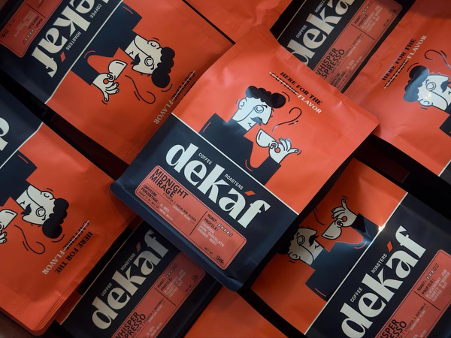
Written By: BOSS Editorial
Reading Time: 3 minutes
Byline: Shem Semblante
Photo Courtesy of: Dekaf Coffee Roasters
Most coffee drinkers have never thought about what happens to a green coffee bean before it gets decaffeinated, and almost none have thought about what happens to it after. That gap in attention is the whole reason decaf has spent decades being treated as the lesser shelf at the café. It is also the reason a brand like Dekáf Coffee Roasters can exist.
Anil Mezini and Khanh Nguyen founded Dekáf after more than two decades in specialty coffee, arguing that decaf had too often been treated as an afterthought in sourcing, roasting and presentation. Their premise was straightforward: the problem was not decaf itself, but how little care much of the category received after decaffeination.
The Bean Changes Before You Ever See It
Decaffeination changes the bean before roasting even begins. Dekáf says its coffees use Swiss Water® Process methods, which remove caffeine before the coffee is roasted and can alter how the beans behave under heat. The company’s own roasting guidance says decaf beans tend to be more fragile and can respond differently in the roaster than caffeinated coffees, which is one reason decaf often requires a separate approach.
That creates a challenge for any roaster chasing nuance. Dekáf’s own materials say decaf should not be roasted exactly like standard coffee, because the decaffeination process changes the bean’s structure and affects how it develops in the roaster. The practical takeaway is simple: if a roaster wants sweetness, clarity and origin character in the cup, decaf often needs its own roast logic rather than a borrowed profile.
Each coffee in the lineup gets its own roast profile rather than being treated as a generic decaf. That matters because it frames decaf as a coffee to be developed on its own terms, not as a watered-down version of a caffeinated original.
Caffeine by Design
The other thing Dekáf does that most specialty roasters do not is build a product architecture around caffeine itself. The lineup includes decaf, quarter-caf at roughly 25 percent caffeine, and half-caf. The point is not to give customers a workaround. The point is to give them a vocabulary.
The language around the lineup is deliberate. Dekáf presents decaf and low-caf coffee as specialty products in their own right, not as fallback choices for people who cannot drink “regular” coffee. In that framing, caffeine becomes one more dimension of preference alongside roast, origin and brew method.
That framing only works if the coffee delivers. A customer choosing half-caf or decaf is often making a deliberate decision, whether for sleep, health, routine or preference, and that raises the standard for the cup itself.
The Work That Does Not Show up on the Bag
The visible side of Dekáf includes subscriptions, sample packs, and, more recently, drinkware. The less visible side is the production discipline behind the brand: sourcing decaffeinated coffees with specific processing methods, developing roast profiles for each coffee, and treating decaf as a category worthy of the same evaluation standards as any other specialty offering.
It is the least photogenic part of the business, but arguably the most important. For Dekáf, the claim to seriousness rests less on branding than on whether that hidden work shows up in the cup.
Great decaf asks for more precision than most drinkers ever see. Dekáf’s bet is that the extra work is exactly what the category has been missing.


