


Competitive Advantage Through Infrastructure: Where Can I Find the Most Affordable Modular Cleanrooms?
The modular cleanroom sector now commands board-level attention. Analysts valued the global market at $660 million in 2024 and project expansion to reach $1.15 billion by 2033.
Written By: BOSS Editorial
Reading Time: 7 minutes
Executive Summary
The modular cleanroom sector now commands board-level attention. Analysts valued the global market at $660 million in 2024 and project expansion to reach $1.15 billion by 2033, reflecting a 6.3% compound annual growth rate. Pre-engineered suites significantly shorten construction schedules to bring revenue-generating spaces online in just a few weeks. Operating efficiency follows suit. Modular envelopes consume 67% less energy than comparable stick-builds to align with carbon reduction mandates and trim utility budgets.
Leadership teams asking, “Where can I find the most affordable modular cleanrooms?” know that affordability hinges on more than unit price. Accelerated depreciation, OpEx-friendly leases, and factory-validated documentation compress payback periods and safeguard regulatory timelines. The following analysis details cost drivers, vendor tiers and financing levers so executives can convert cleanroom infrastructure into a measurable competitive advantage.
—————————
Infrastructure decisions now determine whether new therapies reach patients on time or stall behind construction delays. Factory-built modular cleanrooms meet this urgency by arriving pre-validated for sterile compounding and pharmaceutical production, while depreciating like movable equipment. Their plug-and-play design lowers the medical cleanroom cost curve and lets facilities scale or relocate as demand shifts. For leaders asking, “Where can I find the most affordable modular cleanrooms?”, success lies in pairing technical requirements with smart financing and choosing the right partner. Seven suppliers stand out in this regard.
1. Starrco

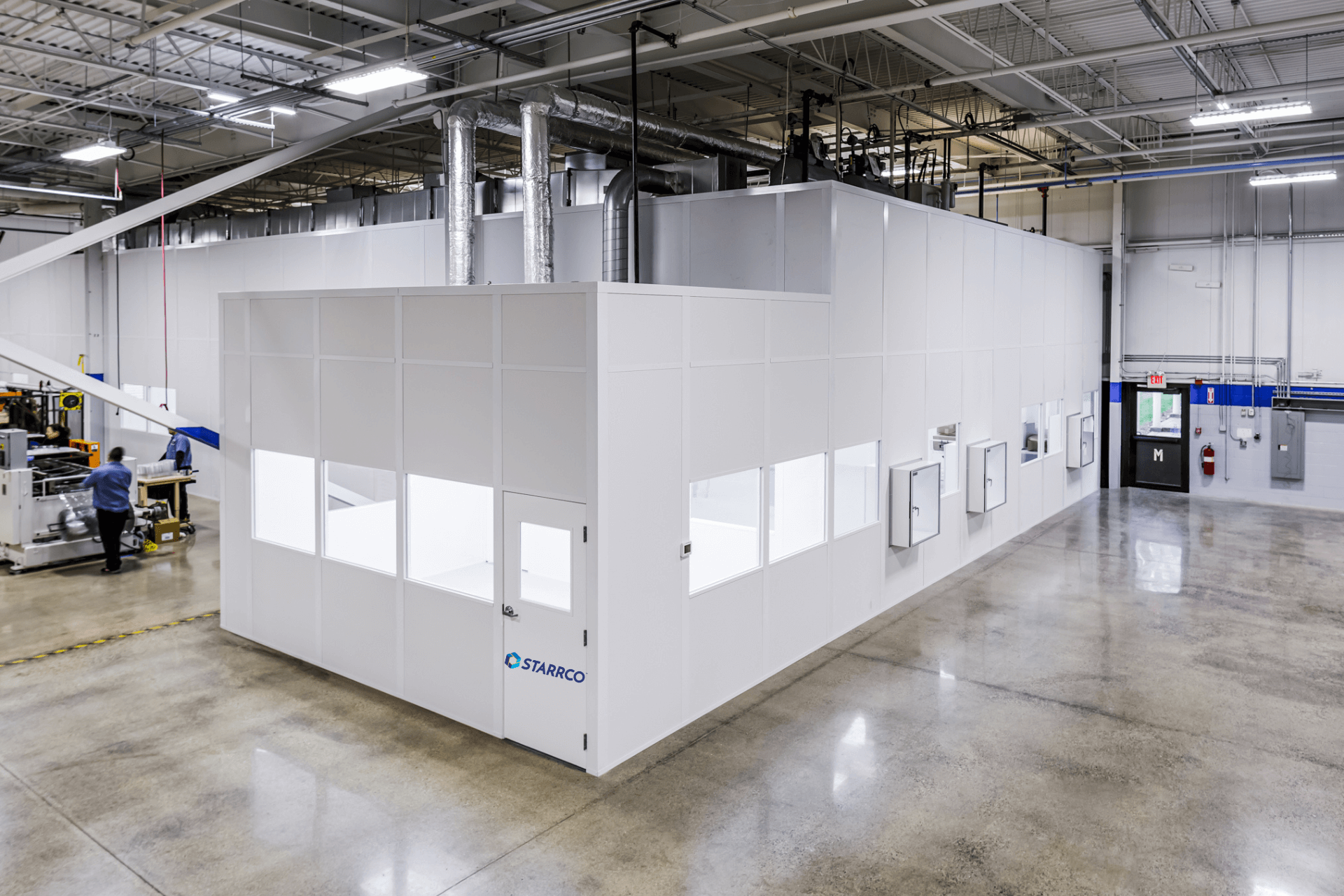
Starrco’s pharmacy-grade modules arrive pre-engineered and “can be set in a few hours,” letting hospitals fast-track USP-compliant sterile-compounding suites. The company positions modular builds as a lower-cost alternative to stick construction that also keeps projects on schedule. A Quick-Ship catalog and lease-to-own terms help finance departments align cash outflows with new service line revenue. Its Five-Starr Blueprint even flags Section 179 tax incentives, turning infrastructure into a year-one tax shield.
2. Cleanroom World
Cleanroom World posts soft-wall packages online for facilities buying on purchase-order cycles. A 12 ft x 12 ft ISO-8 kit starts at around $15,700 and scales to ISO-5 with added fan-filter units. The catalogue approach appeals to ambulatory surgery centers needing one-off health care cleanrooms without lengthy design fees. Typical ship dates run four to six weeks, and credit card checkout keeps transactions off capital committees.
3. PortaFab
PortaFab posts no-haggle web pricing. Buyers appreciate the predictable bill of materials, 10-week lead times and milestone billing that protects working capital. Aluminum framing supports walkable ceilings, trimming retrofit costs when overhead utilities expand. Optional plug-and-play wiring turns on lights and fan filter units without a dedicated electrician.
4. Terra Universal
Terra Universal’s BioSafe stainless steel rooms ship in 25-31 days, compressing revenue-start clocks for biologics launches. Rounded-corner, double-wall panels minimize bacterial harborage and withstand aggressive wash downs, thus extending the life cycle in aseptic production. Rental and operating-lease options treat the suite as movable equipment. A FasTrak 24/7 guarantee even offers fee refunds if Terra misses the committed ship date, adding schedule certainty for regulatory inspections.
5. BASX Solutions
BASX couples heavy-gauge Uni-Grid ceilings with rapid assembly, and on-site installation can finish “in just a few days.” Its Class 10 to 100,000 portfolio features negative-pressure drapes for hazardous drugs and integrated environmental monitoring system interfaces. Design-build contracts with progress payments simplify capital-committee approvals for multi-facility systems.
6. NCI Clean
With 25 years of experience in modular cleanroom systems, NCI Clean offers fixed-price contracts and electronic data interchange ordering, locking budgets and shortening multi-hospital network procurement cycles. Hard-wall spans reach 32 ft without posts to support future expansion, while soft-wall options keep upfront spend low. Quick-connect electrical raceways let crews finish installations in hours.
7. Technical Air Products
Technical Air Products’ LogiClean modules snap together with basic hand tools and let in-house staff relocate or resize rooms without outside contractors. Because regulators treat them as movable equipment, the investment can be depreciated over seven years instead of the 39-year schedule used for permanent structures — an immediate boost to total-cost calculations. Built-in high-efficiency fan filter units lower energy bills, and optional smart controllers keep the space at ISO-4 cleanliness automatically, cutting routine technician time.
The Strategic Value of Modular Cleanrooms in Health Care

Modular cleanrooms offer measurable gains in speed, scalability, compliance, cost control and quality — advantages decision-makers can leverage for immediate competitive impact:
- Speed to market: Biopharma case studies report timeline cuts of eight to 12 weeks double-digit months for stick-built suites.
- Scalability: Bolt-on wall and ceiling panels follow capital demand curves and prevent stranded assets.
- Regulatory assurance: Off-site fabrication arrives with a complete United States Pharmacopeia 797/800 and current Good Manufacturing Practice documentation set. This allows pharmacy leaders to clear audits with minimal follow-up.
- Balanced cash flow: Vendor lease programs shift spending from capital budgets to predictable operating expenses so finance teams can synchronize payments with reimbursement cycles.
- Quality lift: Faster room turnover and fewer contamination alarms raise Hospital Consumer Assessment of Healthcare Providers and Systems scores.
- Proven productivity: A 2023 Interflow deployment cut architectural design time by five and a half weeks and trimmed assembly schedules by 30%, reinforcing modular’s productivity halo.
Cost-Benefit Analysis Framework for Decision-Makers
Before approving any cleanroom project, leadership needs a clear picture of both the money going out and the value coming back in. By walking through these checkpoints, executives see not just what the cleanroom costs but how quickly it pays for itself — and where hidden savings or risks might lie:
- Total cost of ownership: Add every dollar from purchase to resale — purchase price, installation, energy, maintenance and eventual relocation. Modular builds typically cut capital expenses by 20%-30% and slice utility bills by about 15%.
- Return on investment: Faster construction means rooms start earning sooner.
- Internal rate of return (IRR) and payback period: Because modular projects finish quicker, the same cash flows are measured over fewer months, often beating IRR targets boards set for capital projects.
- Hidden costs: Traditional construction can shut down adjacent labs, require extra exhaust work or need added gowning space. Modular designs usually bake these features in to prevent lost revenue and surprise add-ons.
- Financing levers: Many vendors offer leases, efficiency rebates or accelerated depreciation by treating the room as movable equipment. These tools lower the cash you tie up and improve balance sheet optics.
- Insurance and risk: Factory-built modules come together off-site so there are fewer people and hazards on your campus.
- Opportunity cost: Every month saved on construction opens the door to new procedures or drug launches. Speed converts into earlier revenue and market share.
Emerging Cost-Efficiency Technologies in Modular Cleanrooms
New technology is making modular cleanrooms cheaper to own and operate. Smart heating, ventilation and air conditioning software slows fans during nights and weekends, trimming power use. Internet of Things particle sensors continuously check air quality and automatically boost airflow only when necessary so fewer technicians are on standby.
Prefabricated ducts and standardized wall panels snap together at the factory, while cloud-based building-management dashboards let engineers adjust pressure, temperature and humidity from anywhere. Finally, recyclable panel cores meet environmental, social, and governance goals without raising the initial price and make end-of-life disposal straightforward.
Implementation Strategy for Maximum ROI
Any easy path to maximum return begins with short, two-week “sprints” that tackle design, purchasing and validation in agile cycles. Plan the calendar so critical utility hook-ups happen after hours, sparing clinical areas from shutdowns. Install the room in phases so capital spending tracks with program milestones.
Pull facilities, infection-control, finance and pharmacy leaders into one team to speed approvals and sign off on validation protocols before the modules arrive. Most vendors can bundle installation and operational qualification into the same visit, which shaves weeks off startup.
Financing and Procurement Strategies
On the financing side, tap group-purchasing organizations to secure volume discounts across multiple sites, and check whether your state offers energy-efficiency grants for cleanrooms that use variable-air-volume systems. Compare leases with loans — operating leases keep the spend off the balance sheet and lift return-on-asset numbers, while loans may suit enterprises that want ownership from day one.
At the negotiating table, lock in a fixed-price contract with penalties for late deliveries and require the vendor to include validation in the base quote to avoid change-order creep. Align all approvals with your capital committee calendar so funds are released on time and the project stays on track.
Decision Point — Where Can I Find the Most Affordable Modular Cleanrooms?

Affordable cleanrooms come from balancing supplier pricing, energy-efficient engineering and flexible financing. By weighing these together, leadership teams can install validated spaces in under three months, then relocate or expand them when strategy shifts. Put simply, the answer to the question is less about geography and more about matching risk tolerance, timeline, and budget discipline. Health systems that treat cleanrooms as strategic assets and not construction line items will stay nimble and protect margins in value-based care.


