

The Game Plan
In their State of Mobile Gaming 2025 report, the digital intelligence and app data analysts at Sensor Tower detailed just how much we love gaming, and what that means for game creators and advertisers.

Written By: BOSS Editorial
Reading Time: 5 minutes
State of Mobile Gaming Report shows blueprint for growth in the sector
We love our phones. We love them so much that the average American spends more than 5 hours on their phone per day. Many of us are on them first thing in the morning and right before we go to bed, which we should probably stop doing. We love scrolling through social media. We love shopping online. And we love mobile gaming. In their State of Mobile Gaming 2025 report, the digital intelligence and app data analysts at Sensor Tower detailed just how much we love gaming, and what that means for game creators and advertisers.
Ups and Downs
While 2024 saw a 6.6% decline in games downloaded worldwide, in-app purchases in mobile games went up 4%. People are initiating more gaming sessions and spending more time playing. That indicates the games that are thriving have found a formula to attract and retain players. Live operations, the continuous management and optimization of gameplay in response to player behavior, is the secret sauce.
“If you’re not working on live ops and you don’t understand how to retain your players, you’re going to have a problem,” Playtika founder Robert Antokol told GamesBeat.
A staggering 84% of in-app purchase revenue went to games with live ops in 2024, and games with a daily bonus saw 12 times more revenue than those without one. Games like MONOPOLY GO!, which led the world in-app purchase revenue, made innovative strides in live ops. Partner events, designed to allow groups of friends to play together, have kept users engaged and looking forward to the next one.
“At Scopely, we are driven by a culture of iteration and innovation — known as a ‘Learning Machine’ — that empowers us to constantly analyze data, apply insights across our portfolio, and quickly pivot where needed,” Jessica Zestar-Postrk, senior VP of strategy and business operations for Scopely, which released MONOPOLY GO! in 2023, said.
Getting into the Game
The success of MONOPOLY GO! is emblematic of a trend in mobile gaming product models. While casual games like MONOPOLY GO! and Candy Crush Saga had fewer downloads in 2024 compared to 2023, their revenue went up. The games are easy to play, drawing in casual gamers, and are not so engrossing that users get caught up in gameplay and don’t notice the in-game ads. Thus, they monetize both through in-app purchases related to the game and through ad revenue, to the tune of $32.4 billion in purchases through casual games in 2024.
Seizing on this trend, game makers have developed hybrid-casual games that combine simple gameplay with long-term progression. Games like Match Factory! And BangBang Survivor helped hybrid-casual game increase their revenue by 37% last year.
“At CrazyLabs, we successfully embraced our transition to hybrid-casual gaming, aligning with evolving market trends. This strategic shift enabled us to craft more engaging player experiences while developing a robust pipeline of innovative titles,” CrazyLabs founder and CEO Sagi Schliesser said.
Another new model growing steadily is exclusive access games. Often ad-free, they’re included with membership to subscription services like Netflix, which offers such titles as Grand Theft Auto: San Andreas, Sonic Mania Plus, and Tomb Raider Reloaded free to subscribers.

Keep Them Playing
Strategy and action games keep players engaged the longest. Brawl Stars, which saw a huge increase in time users spent playing, was one of four games that surpassed the $1 billion revenue mark in 2024, joined by Last War, Whiteout Survival, and Dungeon & Fighter. In all, a record 11 mobile games brought in more than $1 billion, while only five non-game apps hit the mark.
“The shining star is Brawl Stars. I’ve never seen in my career this kind of growth for a six-year-old game. It’s been absolutely incredible,” Ilkka Paananen, CEO of Brawl Stars maker Supercell said.
Paired with the company’s first new game launch since Brawl Stars debuted in 2018, Squad Busters, it made for an interesting year for Supercell. Squad Busters brought in more than $100 million in its first seven months and was Apple’s iPad Game of the Year, but it struggled to gain and retain an audience. Paananen called it a learning experience.
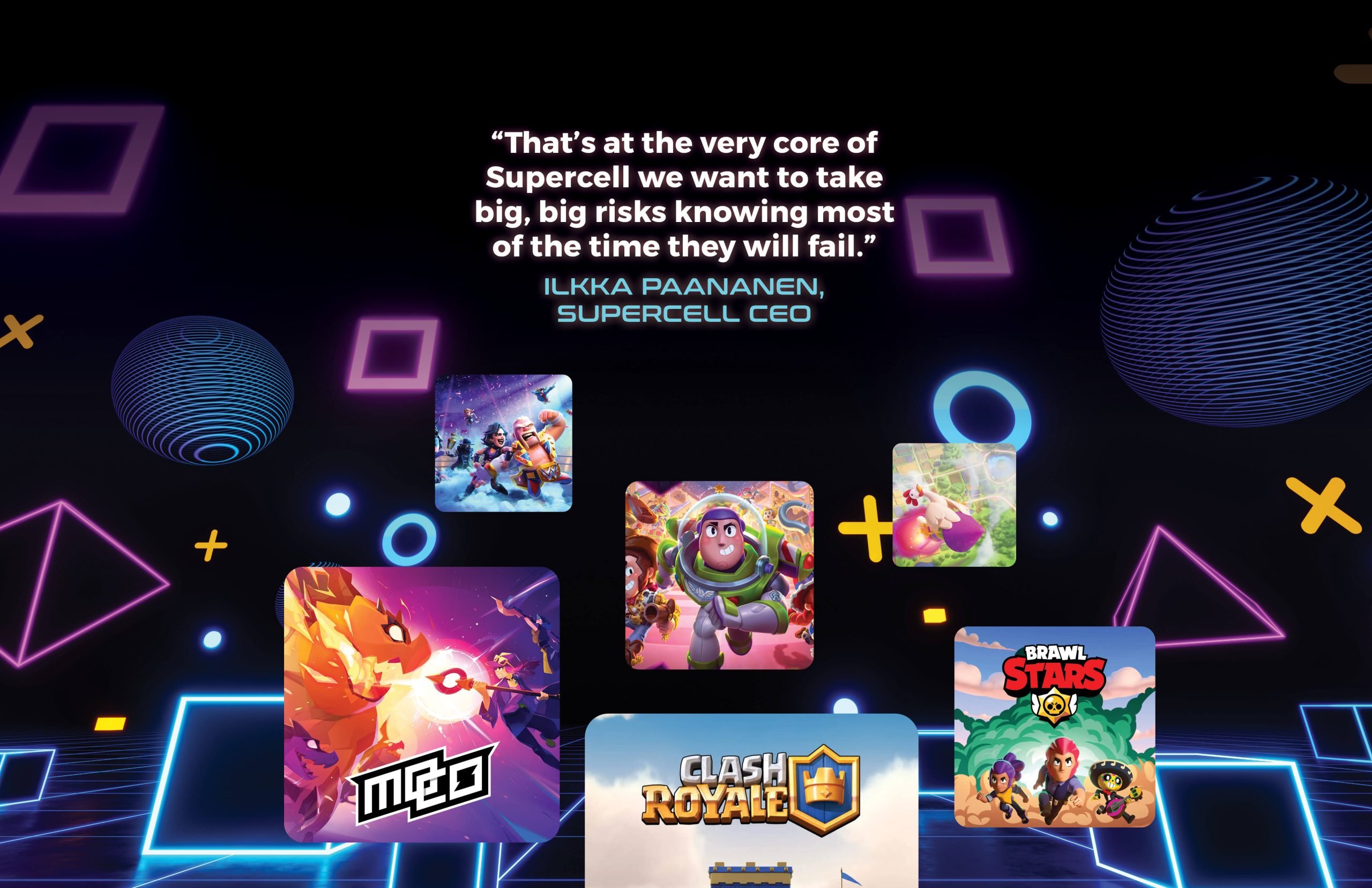
“That’s at the very core of Supercell we want to take big, big risks knowing most of the time they will fail,” he said. “Everything that they’ve learned from the Squad Busters launch we can now apply to any future game launches.”
Regional Growth
Asia yielded a 3% decrease in year-over-year revenue from in-app purchases but remained the leading region in spending at $38 billion. Meanwhile, three regions saw double-digit growth, led by the Middle East’s 18% spending increase. In-app purchases in Europe rose 14%, with those in South America going up 13%. Mohamed El Sheakh, founder and CEO of Games Ventures credits government support, culture moments such as Ramadan bringing groups together, and a young, tech-savvy population for the Middle East’s rapid gaming growth. Saudi Arabia, the UAE, and Egypt have led this charge, sponsoring tournaments and investing in gaming infrastructure.
“The Middle East is a unique market for gaming,” a 2023 Boston Consulting Group report stated. “Governments in the GCC region have invested heavily in the industry and recognized its potential, implementing strategies to attract gaming companies.”
El Sheakh says that treating each country as unique and not simply copying and pasting a Western model thinking it will work in the Middle East is what will drive continued growth in the region. Arabic-first marketing, user interfaces, and voiceovers go a long way toward establishing credibility with the target, he says.
Sensor Tower’s report concludes much the same: “Generating effective creative requires knowledge of your audience and their culture. Using celebrities like Whiteout Survival did in the left creative can be a great way to target an audience, but understanding local celebrities, their brands, and their audiences is crucial. Categories that are more niche in one market may be huge in another.”
More Articles Like This


From fake to favorite: food’s big flex
Consumer demand for plant-based foods is intensifying, fed by an emerging class of enthusiasts – the flexitarians

Build Without the Bottlenecks: 4 Tools Helping Software Teams Move Faster
Explore four tools helping software teams move faster by improving testing, browser automation, app generation, and AI-ready data infrastructure.

How Steve Rozenberg Went From Airline Pilot to Business Solutions Expert for Contractors
Learn how Steve Rozenberg transitioned from airline pilot to business solutions expert, using systems and structure to help contractors build scalable...

