


Back to Nature
To combat all types of work-induced stress, in the 1980s the government of Japan began promoting Shinrin-yoku (“forest bathing”) as a therapeutic method.

Written By: Damien Martin
Reading Time: 5 minutes
The health benefits of forest and desert bathing
“We need the tonic of wildness,” Henry David Thoreau wrote in “Walden,” “ … We can never have enough of nature.”
Finding the hustle and bustle of modern life to be overwhelming, Thoreau retreated to the woods in order to live a deliberate, simple life. And that was in the 1840s when daguerreotypes were becoming popular. Nowadays, we have devices that fit in the palm of our hands that not only shoot photos but handle emails and surf the web and social media. They make it possible for us to work or doomscroll 24/7. We are busy and we are stressed.
To combat this type of work-induced stress, in the 1980s the government of Japan, which is made up mostly of forested land outside the major cities, began promoting Shinrin-yoku (“forest bathing”) as a therapeutic method. The health benefits are real, and taking Thoreau’s advice can do wonders for the average American, who spends more than 90% of the time indoors. We don’t all have to move to the woods, even just a couple hours a week will do.
Good Health Grows on Trees
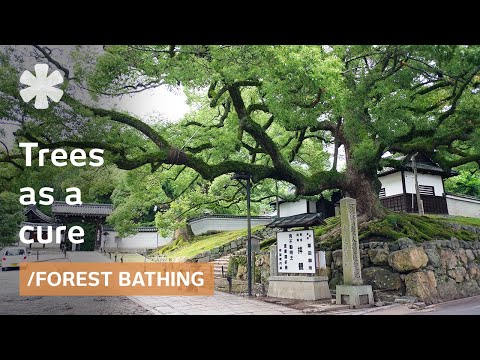
Go for a walk in nature and you naturally start to feel better. You unplug a little, let your mind wander and take in your surroundings. You notice the beauty of things that are always there but you rarely see when inside looking at a screen. You inhale the fresh air and start to breathe a little deeper.
With forest bathing, the effects aren’t just psychosomatic. Trees give off essential oils called phytoncides that can boost immunity, including the production of so-called natural killer cells that prevent viruses and cancer from spreading. Some tree oils can lower blood pressure and alleviate anxiety and depression. Those that can contain 3-carene can fight depression, inflammation, repair bones, and promote mental focus.
Forest bathing has been shown to lower cholesterol, blood pressure, pulse rate, and the risk of diabetes and heart disease. By lowering levels of the stress hormone cortisol, it can make up for hours and hours spent hunched over a computer or scrolling through a phone and worrying about work or whether we’re as good as other people we see on social media. Forest bathing increases parasympathetic nerve activity, making it easier to relax and regulate things like digestion and breathing.
“The key to unlocking the power of the forest is in the five senses. Let nature enter through your ears, eyes, nose, mouth, hands, and feet,” Dr. Qing Li, author of “Forest Bathing: How Trees Can Help You Find Health and Happiness” and a pioneer in forest bathing research, advised in Time. “Listen to the birds singing and the breeze rustling in the leaves of the trees. Look at the different greens of the trees and the sunlight filtering through the branches. Smell the fragrance of the forest and breathe in the natural aromatherapy of phytoncides. Taste the freshness of the air as you take deep breaths. Place your hands on the trunk of a tree. Dip your fingers or toes in a stream. Lie on the ground. Drink in the flavor of the forest and release your sense of joy and calm. This is your sixth sense, a state of mind. Now you have connected with nature. You have crossed the bridge to happiness.”
From the Forest to the Desert

The Association of Nature & Forest Therapy has a network offering guided forest bathing in more than 60 countries. Founder and CEO Amos Clifford told AZ Central that there’s been an uptick in the number of doctors taking the company’s training courses in recent years.
“Anything that’s new or different tends to get dismissed by a lot of our population as a kind of woo-woo practice,” he said. “Doctors don’t go for it if it’s woo-woo, they go for it if there’s science. And so training a bunch of doctors and having them incorporate it in one way or another in their practice (may elevate) shinrin-yoku, forest therapy in general, in the public consciousness to the tier of a real legitimate practice.”
The association is headquartered in Prescott, Ariz., near a national forest. Go to lower elevations in Arizona and you’ll find fewer trees and lots of desert, seemingly not the type of place where you’d get a lot of those plant-based benefits. But ethnobotanist and desert ecologist Gary Nabhan and his tam of researchers found that many desert plants give off volatile organic compounds that have many of the same properties as the tree compounds that have proven beneficial in forest bathing.
Nabhan’s research continues, and resorts in Arizona have begun offering desert bathing as part of their wellness packages. The Boulders Resort & Spa in Scottsdale has collaborated with Sonora Explorin’ Tours on desert bathing tours in the Sonoran Desert foothills. Also in Scottsdale, the Four Seasons Resort at Troon North launched a desert bathing experience in 2022 that includes a Zen hike with stops for yoga poses along the way and concluding with aromatherapy and a recentering exercise at the resort’s spa.
“Similar to forest bathing, Desert Bathing is designed to help participants unplug from technology and slow down,” senior spa director Jaana Roth wrote. “It is thought to help promote more energy and better sleep, as well as provide mood-boosting effects which translate to a more relaxed state of mind. The key to Desert Bathing is to engage the five senses, letting nature enter the ears, eyes, nose, mouth, hands, and feet. Take the time to listen to the birds chirping, see the different varieties of cacti and native plants, and smell the rich scent of creosote bushes and desert sage. Taste the freshness of the air and feel the desert sand beneath underfoot.”
She points out that “many cultures have long recognized the importance of immersing oneself in the natural world as a benefit to human health.”
So every once in a while, step away from the computer, put down that phone, and go for a walk in nature. It’ll do you good.
As Thoreau wrote, “Why, ‘nature’ is but another name for health.”
More Articles Like This


The Business Case for Investing in the Latest Solar Technology
Investing in the latest solar technology is not just an environmental imperative but a strategic business decision.

5 Ways EVs Can Boost Your Business’s ESG Score and Brand Reputation
Beyond just cutting emissions, EVs can play a vital role in enhancing your own company's ESG score and public image.

Could FCEVs Be the Silent Disruptor of the Electric Vehicle Market?
EVs and FCEVs offer solutions for sustainable transportation and emissions reduction.

Going On the Rails
California might be out front, but it's not the only place in the U.S. looking to add zero-emissions trains. Chicago's Metra bought eight two-car electric trains from Stadler in 2024.

Compact and Reliable: The New Era of Low-Voltage Equipment
Low-voltage products play a pivotal role in shaping safe, smart electrical systems.


